
How to Serve Canned Water at Events

The water choice at an event says more than most planners think. It signals whether the host pays attention to detail, whether sustainability is real or performative, and whether guest experience has been designed with intent. That is exactly why more hospitality teams are asking how to serve canned water at events in a way that feels elevated, not improvised.
Canned water is not a downgrade from traditional bottled service. In the right setting, it is the sharper choice. It removes the visual and ethical drag of single-use plastic, gives operators a cleaner sustainability story, and can look decisively premium when the presentation is right. But execution matters. If the service style feels clunky, warm, or out of sync with the venue, even great packaging will underperform.
How to serve canned water at events without losing the luxury feel
The first decision is not the can itself. It is the role water plays in the event. At a poolside activation, canned water can be direct, cold, and high-volume. At a plated dinner, it may need to work more like tableside beverage service. At a conference, it should support quick access and minimal service friction. The same format will not be served the same way across all three.
Premium events succeed when every beverage format matches the moment. That means thinking beyond procurement and into choreography. Where will guests first encounter the water? How will staff carry it? Will it be self-serve, tray-passed, preset, or poured? Will the package be seen as part of the design language or simply as utility? These are hospitality questions, not packaging questions.
If the event is high-touch and brand-sensitive, canned water should be integrated into the visual standard from the start. That often means chilled presentation, well-designed ice displays, clean merchandising lines, and staff training that treats water as a premium offering rather than a commodity. There is no need for plastic water. But there is also no room for careless service.
Match the format to the event environment
Not every event asks the same thing of canned water. Outdoor events reward portability, durability, and speed. Aluminum performs especially well here because it chills fast, travels well, and handles active service zones better than glass. It is practical without looking cheap.
Indoor luxury environments can go either way. If the audience expects polished tabletop service, the can needs context. That may mean serving it in a chilled sleeve, presenting it on a tray with glassware, or opening it tableside when appropriate. If the event is more contemporary - gallery opening, design conference, fashion afterparty, private terrace reception - serving the can as the primary vessel can feel modern and intentional.
The real mistake is trying to force one service model onto every room. Canned water is flexible. Use that flexibility.
Build the service plan around temperature, placement, and pace
Guests notice cold water immediately, and they notice lukewarm water even faster. Temperature control is one of the biggest factors in whether canned water feels premium. The can should be served properly chilled, with replenishment planned by zone and by hour, not left to chance.
This is where event teams often oversimplify. They order canned water because it is easier to store and distribute, then treat service as an afterthought. But premium execution requires forecasting. How many cans need to be front-loaded before doors open? How many should remain in back-of-house refrigeration? How often will floor teams restock displays? If the event is outdoors or in a warm climate, your usage curve will spike harder than you think.
Placement matters just as much. Water should appear where guests naturally pause - registration, room entrances, stage exits, transportation pickup, lounge zones, and outdoor transition points. If guests have to search for hydration, the service feels underbuilt. If the water is visible before it is needed, the event feels intelligently run.
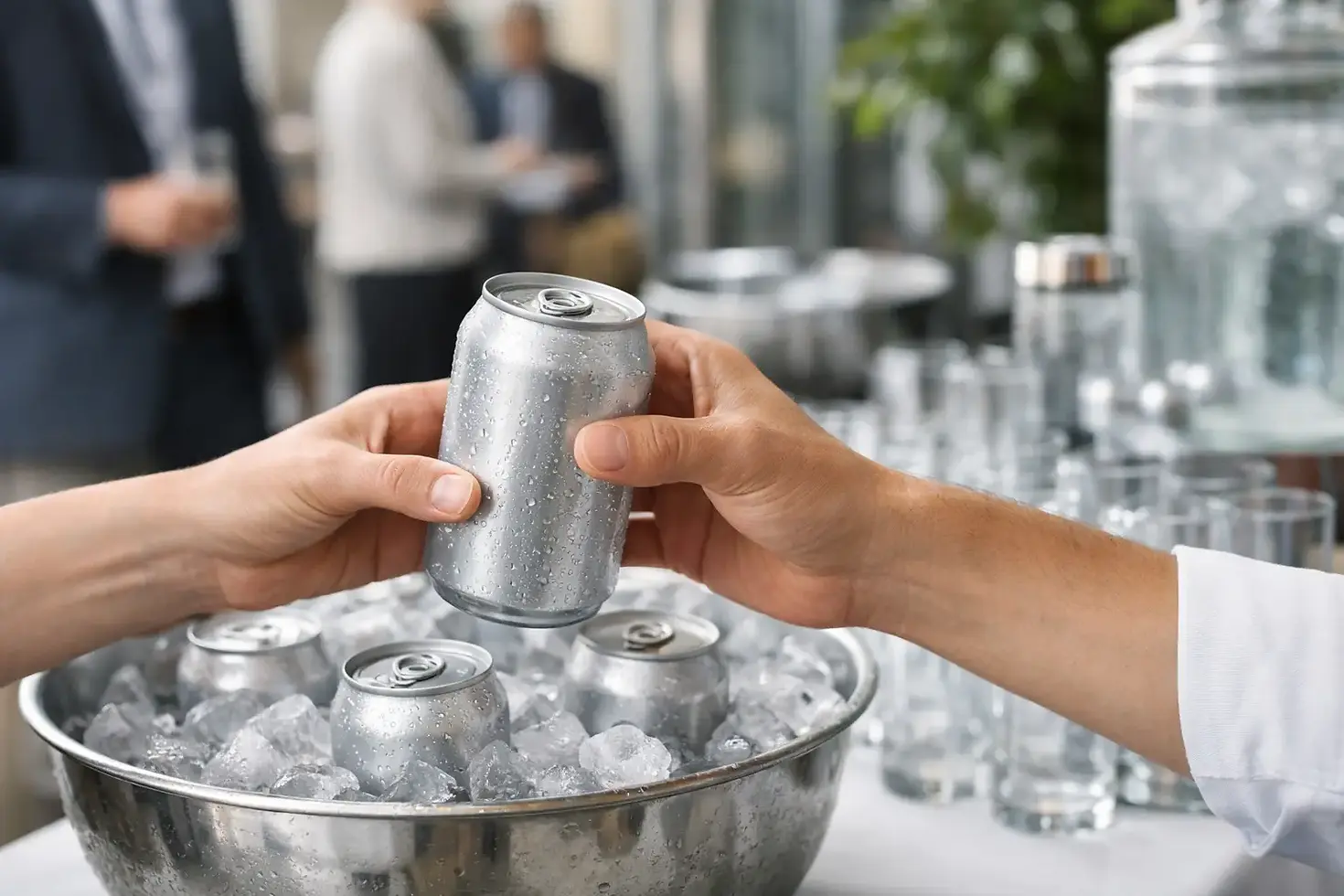
For high-volume conferences and corporate gatherings, canned water also helps control service speed. A guest can grab, open, and move on. That reduces lines and lowers labor pressure. The trade-off is that self-serve areas must still look polished. Ice bins, branded coolers, replenishment carts, and merchandising surfaces should feel curated, not improvised from banquet storage.
Train staff to present, not just distribute
A premium water program is won or lost at the service level. Staff should know whether the can is handed over unopened, opened on request, or paired with a glass. They should know the difference between still and sparkling placement and be able to guide guests naturally.
This sounds basic, but it is where many otherwise strong events slip. Water gets treated as background inventory. In premium hospitality, that is the wrong mindset. Water is part of the guest memory because it is one of the few things every guest interacts with.
Service language should be simple and confident. Offer it the same way you would offer Champagne at arrival or coffee after dinner - as a considered choice. A polished, concise prompt works better than a rushed handoff. Presentation communicates value.
Design matters when serving canned water at events
If you are serving canned water at events where image matters, the package is part of the room. That is not superficial. It is the difference between a sustainability claim that feels aspirational and one that feels fully realized.
Aluminum cans bring a cleaner visual signal than disposable plastic, especially in premium environments that care about architecture, tablescaping, and photography. They can align with modern luxury in a way that feels current rather than conventional. But only if the rest of the setup supports it.
Think about the full scene. Are cans sweating onto linen? Are recycling touchpoints visible but discreet? Are premium beverages grouped in a way that creates coherence, or is water scattered as an afterthought? Is the event trying to project environmental leadership while hiding evidence of consumption behind curtains and bus tubs? Guests pick up on contradictions.
This is why strong operators build canned water into the event design brief early. Beverage service, sustainability standards, and visual merchandising should not be separate conversations. They are one decision expressed three ways.
Know where canned water performs best
Canned water is especially effective in spaces where mobility, throughput, and sustainability visibility matter. Conferences, sporting hospitality, wellness retreats, luxury outdoor weddings, rooftop events, backstage talent areas, and VIP arrivals are all strong use cases. In these settings, the can does not need to apologize for itself. It is efficient, attractive, and aligned with contemporary guest expectations.
For fine dining or highly ceremonial service, it depends on the style of the event. Some rooms still favor glass or poured formats for ritual and tradition. That does not make canned water the wrong choice. It means the service model may need adaptation. Pairing canned water with glassware, ice-side presentation, or selective placement can preserve elegance while keeping plastic out of the experience.
That balance matters to procurement teams. Sustainability goals are real, but guest perception is still king. The strongest beverage programs refuse the false choice between ethics and luxury.
Operational details that separate average from excellent
Inventory planning should account for event duration, weather, audience profile, and beverage mix. A wellness audience or daytime conference will consume more water than an evening cocktail crowd. Sparkling often performs differently by region and demographic. Build par levels from actual event behavior, not generic beverage ratios.
Back-of-house setup should protect speed. Keep cold stock close to service zones. Assign ownership for replenishment. Make sure empties are collected fast so guest areas stay sharp. Because aluminum is infinitely recyclable, disposal can support the sustainability story - but only if the recovery process is visible, organized, and credible.
If you are working with a premium plastic-free brand, the value is not only in the package. It is in what the choice says about your standards. Bluewater Premium is built around that idea: some of the best water in the world, delivered without compromise and without plastic. For luxury venues, that is no longer a niche position. It is where the market is heading.
The event industry loves to talk about experience. Water is one of the fastest ways to prove whether that commitment is real. Serve it cold. Serve it beautifully. Serve it with conviction. Guests may not remember every floral detail or every line on the menu, but they will remember whether the event felt current, thoughtful, and aligned with the values it claimed to represent.


Comments